 LINE @a175176
Room temperature rising
Possible causes include poor condenser heat rejection, refrigerant leakage, compressor or fan faults, defrost problems, control faults or heat entering through the room envelope.

WALK-IN COOLERS AND FREEZERS
A rising room temperature can affect stored food and business operations. We inspect modular walk-in coolers and freezers as a complete system, including the condensing unit, compressor, refrigerant circuit, evaporator, defrost system, controller, doors and insulated panels.
Commercial equipment only — we do not repair household refrigerators.
A walk-in cooler or freezer must be assessed as a complete refrigeration and insulated-room system.
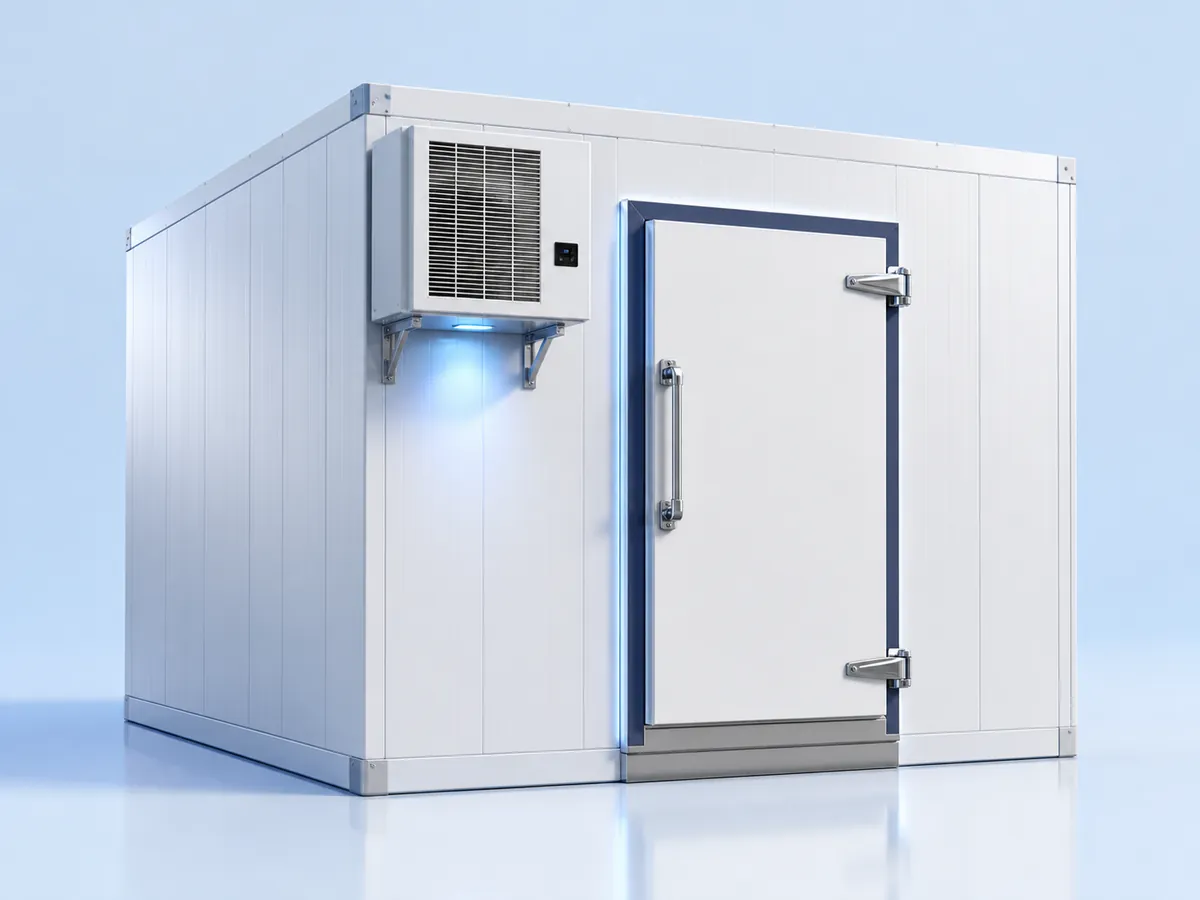
Possible causes include poor condenser heat rejection, refrigerant leakage, compressor or fan faults, defrost problems, control faults or heat entering through the room envelope.
A failed heater, sensor, controller or drainage system can cause ice to build up around the evaporator.
Damaged gaskets, poorly closing doors or panel-joint problems can allow heat and moisture into the room.
We assess the controller, sensors, contactors, protection devices, fans, wiring and compressor operation according to the symptom.
We check room temperature, setpoint, compressor operation, pressure, current and fault codes.
The condenser, evaporator, fans, ventilation and frost condition are inspected.
Doors, gaskets, panel joints, insulation condition and drainage are assessed where relevant.
We explain whether the likely fault involves the refrigeration unit, controls, defrost system or insulated room before quoting work.
Check that the power is on, the door closes fully and nothing is blocking the doorway.
Record the current room temperature, setpoint, alarm code and when the temperature started rising.
If there is a burning smell, repeated electrical tripping or severe mechanical noise, stop the unit if it is safe to do so and contact a technician.
The cause may be in the condensing unit, refrigerant circuit, fans, defrost system, controls, door seal or insulated panels. On-site inspection is needed.
Stop it if there is a burning smell, repeated electrical tripping or severe abnormal noise and it is safe to do so. Otherwise reduce door opening, protect the stock and arrange inspection promptly.
Send the room size, current temperature, setpoint, controller and alarm display, condensing-unit photo, nameplate and a description of when the fault started.
Send the equipment type, current temperature, photos of the unit and nameplate, and your location on LINE. We will review the information and arrange an on-site inspection.
Commercial equipment only — we do not repair household refrigerators.
 LINE
LINE